Executive SummaryMany businesses assume that commissioning a logo completes their branding. In reality, a logo is merely the visual signature of a company, while a brand identity is the complete architectural system—including color hierarchy, typography, verbal messaging, and touchpoint design—that turns customer attention into sustained commercial trust. This comprehensive guide breaks down the core differences in scope, deliverables, costs, and business impact.
One of the most expensive mistakes an entrepreneur or marketing leader can make is confusing a logo with a brand identity. When a company invests in an isolated graphic mark without the accompanying visual system and strategic guidelines to support it, the brand invariably fractures across digital and physical customer touchpoints.
The Core Confusion: Why a Logo Is Not a Brand Identity
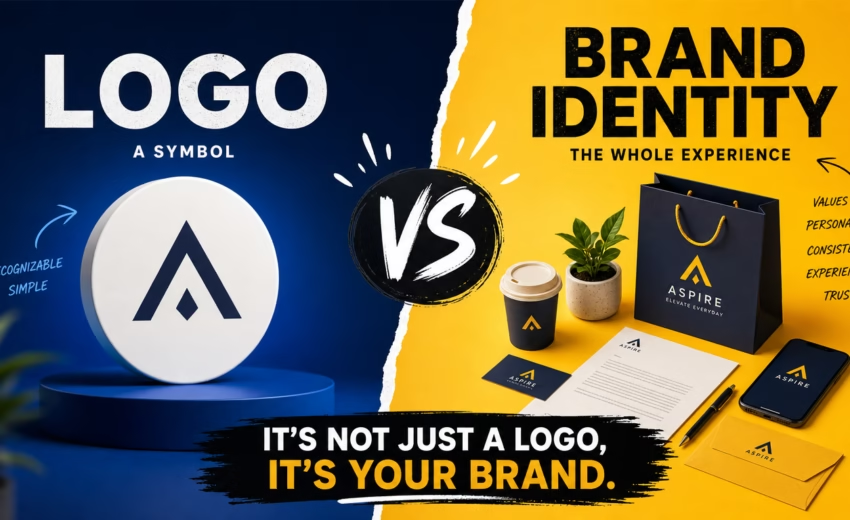
To understand the fundamental debate of logo vs brand identity, consider a simple architectural metaphor: a logo is the front door plaque of a skyscraper, while the brand identity is the complete structural architecture, interior layout, materials, and lighting that make the building functional and prestigious.
A logo is an identifying graphic mark, symbol, or typographic wordmark used to trigger instant brand recognition. Its primary commercial function is identification. A brand identity, on the other hand, is the cohesive ecosystem of visual, verbal, and tactile tools engineered to express what the business stands for, differentiate it from competitors, and shape customer perceptions across every commercial touchpoint.
As detailed in our guide to building a strong brand identity and our analysis of strategic brand colors and color psychology, a logo cannot communicate value on its own. Without consistent typography, structured color palettes, and documented guidelines, an isolated logo looks amateurish the moment it is applied to a website, pitch deck, or product package.
“A logo identifies your business; a brand identity gives your business meaning, pricing power, and visual authority.”
Direct Comparison: Scope, Deliverables, and Operational Scale
When evaluating professional design investments, business owners must understand exactly what each scope delivers. The following comparison highlights the operational differences between commissioning a standalone logo and developing a complete brand identity system:
← Scroll horizontally on mobile →
| Dimension | Standalone Logo Design | Complete Brand Identity System |
|---|---|---|
| Core Purpose | Visual identification and recognition of a company or product. | Shaping complete customer perception, emotional trust, and market authority. |
| Primary Deliverables | Primary logo files (vector AI/EPS, SVG, PNG) in dark and light versions. | Logo suite (primary, horizontal, submark, favicons), 60-30-10 color hierarchy, typography system, iconography, stationery, social kit, and official brand guidelines PDF. |
| Design Research | Basic aesthetic exploration and competitor symbol scanning. | Target audience psychology, competitive positioning, touchpoint audits, cross-medium stress-testing, and commercial messaging alignment. |
| Longevity & Scalability | Quickly breaks down when scaled across web apps, packaging, or marketing collateral. | Engineered to scale seamlessly across multi-channel advertising, physical retail, and enterprise digital ecosystems. |
| Commercial Impact | Helps people remember your name. | Justifies premium pricing tiers, eliminates customer doubt, and builds long-term brand equity. |
1. Dynamic Logo Suite (Not Just a Single Graphic)
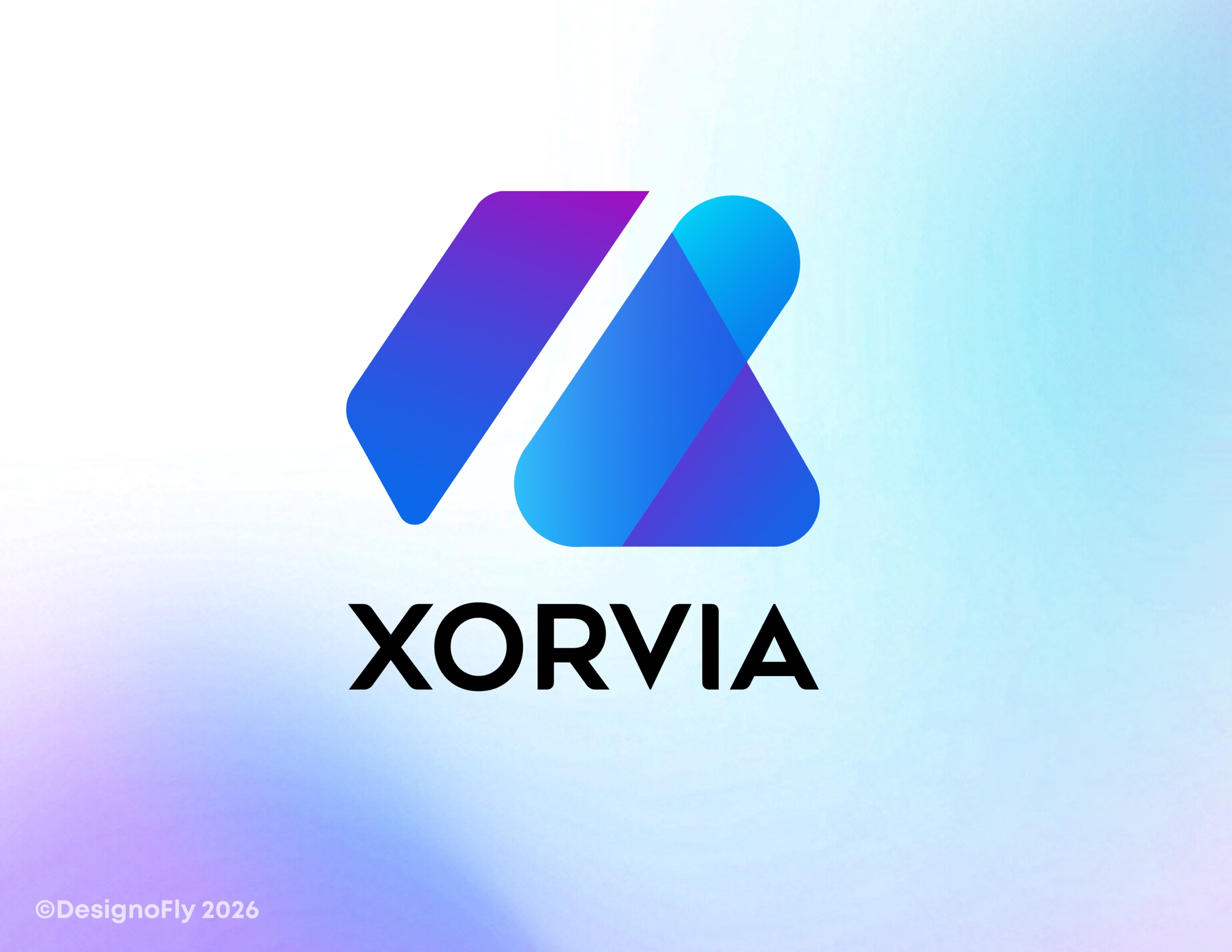
A rigid, square logo cannot fit comfortably into a 50px mobile website header, a square social media avatar, an embroidered polo shirt, and a horizontal invoice banner. A complete brand identity provides adaptive variations: primary lockups, horizontal layouts, standalone submarks/monograms, and inverted monochrome marks.
2. Strategic Color Hierarchy (Digital & Print Calibration)
Rather than arbitrary colors, an identity system establishes a mathematical 60-30-10 ratio with exact formulas across HEX, RGB, CMYK, and Pantone/PMS. This ensures that the green or blue on your screen prints with 100% fidelity on physical brochures, product packaging, and investor reports.
3. Typographic Hierarchy System
Typography conveys the vocal posture and maturity of your company. An identity system selects primary headline fonts, legible body copy, and secondary monospace or accent typefaces, establishing strict scales, tracking, and leading rules for web developers and print vendors.
4. Supporting Graphic Assets & Patterns
Distinctive brands can be recognized without their logo in sight. Secondary assets like custom geometric grid patterns, bespoke iconography, directional arrows, and texture treatments frame your content and make social carousels and landing pages instantly recognizable.
5. Real-World Collateral Applications
An identity system stress-tests the visual language on real commercial touchpoints: corporate stationery, business cards, email signatures, presentation decks, packaging cartons, and responsive website UI components.
A Standalone Logo Is Sufficient If:
- Early-Stage Idea Validation: You are testing an unproven micro-concept, side project, or prototype where market demand has not yet been established.
- Internal Tools & Hackathons: You need a temporary mark for an internal dashboard, hackathon submission, or short-term private team initiative.
- Extremely Tight Bootstrap Budget: You have minimal initial runway and need a basic clean vector mark to launch an initial MVP landing page.
A Complete Brand Identity System Is Essential If:
- You Sell High-Ticket Products or Services: When asking clients to spend thousands of dollars on enterprise software, consulting, luxury goods, or healthcare, visual inconsistency breeds instant doubt.
- You Are Pitching Investors or Commercial Partners: Professional venture capitalists and corporate sourcing managers expect institutional polish and documented brand maturity.
- You Are Scaling Across Multiple Channels: The moment you have a website, social media ads, packaging, and multiple team members creating content, without brand guidelines, visual chaos is inevitable.
- You Are Rebranding to Shed a Budget Perception: If your company has grown in service capability but your visual presentation still looks like a $20 Fiverr gig, you are actively leaving revenue on the table.
“A cheap logo attracts price-sensitive shoppers. A cohesive brand identity attracts long-term, high-ticket clients who value expertise over discounts.”
The Bridge: Developing an AI Logo into an Enterprise Brand System
With the explosion of artificial intelligence design tools, many startup founders now start their branding journey by entering a prompt into an AI generator. In seconds, they receive an interesting graphic mark or icon. Many celebrate and believe their branding is complete.
However, practical roadblocks emerge immediately: the AI output is a flat, low-resolution raster file (PNG/JPG) without vector scalability. It cannot be used on an offset printer, does not include responsive variations, lacks color hierarchy, and offers zero guidance on web typography or packaging design.
This is where DesignoFly provides immense strategic value. We frequently collaborate with companies that have an AI-assisted logo concept and transform that raw starting seed into a complete, production-ready brand identity system. We refine and vectorize the geometry, establish mathematical color formulas, pair accessible typography, and compile a definitive Brand Style Guide.
Frequently Asked Questions About Logo vs Brand Identity
Q1: What is the main difference between a logo and a brand identity?
A logo is a single graphic mark or wordmark used to identify a business. A brand identity is the complete visual and verbal system (including the logo suite, color palette, typography, graphic assets, messaging, and brand guidelines) that shapes how the market perceives the company.
Q2: Can I start with just a logo and upgrade to a brand identity later?
Yes. Many early-stage startups begin with a professional logo design during the initial MVP phase. Once product-market fit is established and revenue starts flowing, they invest in a comprehensive brand identity system to support scale and enterprise credibility.
Q3: Why does a brand identity cost more than a standalone logo?
A logo design focuses solely on crafting one visual mark. A brand identity involves extensive market research, audience positioning, developing multiple logo lockups, color accessibility testing, typographic hierarchy, multi-channel touchpoint design (stationery, social, digital UI), and writing a comprehensive Brand Style Guide.
Q4: What deliverables should be included in a complete brand identity package?
A standard professional brand identity package includes: full vector logo suite (primary, horizontal, submark, favicon in AI, EPS, SVG, PNG), documented 60-30-10 color palette with HEX/RGB/CMYK/Pantone values, typography hierarchy rules, supporting graphic elements, stationery designs (business card, letterhead), social media templates, and an official Brand Guidelines PDF.
Q5: How does a strong brand identity impact pricing power?
Visual consistency directly reduces perceived risk in the mind of prospective buyers. High-end visual architecture signals operational maturity, financial stability, and superior service standards, allowing companies to command 2x to 10x higher pricing compared to competitors with fragmented or generic branding.
Q6: What is the difference between brand identity and visual identity?
Visual identity refers specifically to the graphic components you see (logos, colors, typography, patterns). Brand identity is broader—it combines those visual components with non-visual dimensions such as brand voice, core values, mission, and the overall customer experience touchpoints.
Key Takeaways & Conclusion
A logo is a vital visual signature, but a brand identity is the complete commercial engine that establishes market authority, drives customer trust, and commands premium pricing. By investing in an interconnected visual system rather than an isolated graphic mark, you lay the foundation for sustainable commercial growth.
Elevate Your Brand Beyond a Simple Logo
With 9+ years of experience and over 7.8K+ completed projects, DesignoFly engineers bespoke visual identities and complete brand systems that capture high-ticket clientele.

September 4, 2026
Brand Colors: The Complete Guide to Color Psychology...
September 4, 2026